


The Real Math Behind Slot Machines (And Why It Matters)
You’ve seen the glitzy lights, the thumping music, and the guy next to you who just hit a $5,000 jackpot on a penny slot. For a split second, you think: ma
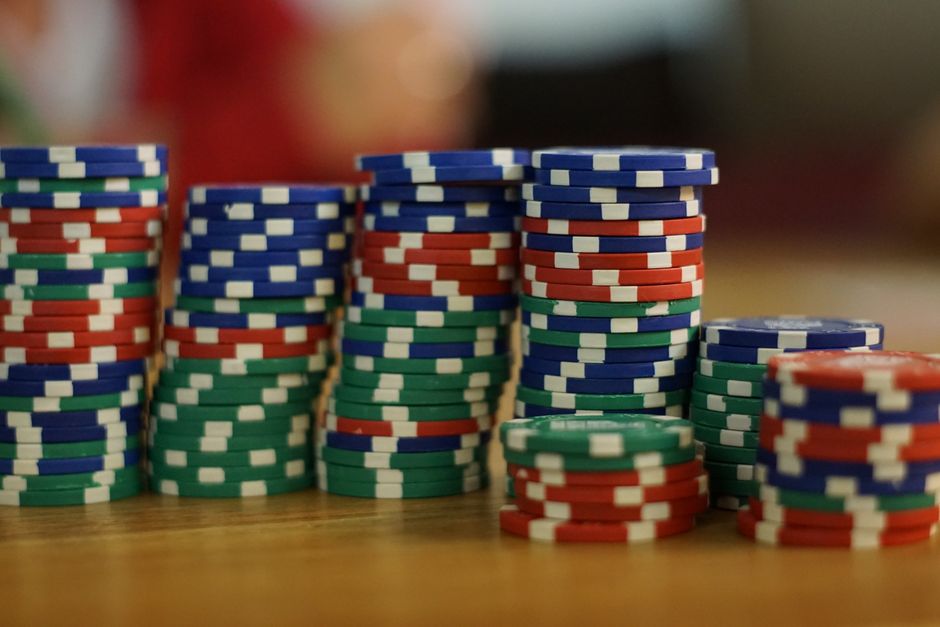
You’ve seen the glitzy lights, the thumping music, and the guy next to you who just hit a $5,000 jackpot on a penny slot. For a split second, you think: maybe today is my day. But behind that flashing screen is a cold, hard algorithm that never gets excited. If you want to play slots — or any casino game — without feeling like a sucker, you need to understand the math that runs the show. It’s not about luck. It’s about percentages.
RTP: The Number That Actually Matters
Every slot machine has a Return to Player (RTP) percentage. This is the theoretical amount of all money wagered that the machine will pay back to players over millions of spins. An RTP of 96% means the casino keeps 4% as profit — the house edge. That 4% is your long-term cost of entertainment.
Here’s the catch: online slots often have higher RTPs than land-based ones. A typical Vegas casino floor might run slots at 85–92% RTP. Meanwhile, top online slots like Book of Dead or Starburst often sit at 96% or higher. Why? Competition. Online casinos can’t rely on foot traffic, so they lure you with better payback. But that doesn’t mean you’ll win. RTP is calculated over millions of spins — not your 100-spin session.
Example: You bet $1 per spin on a 96% RTP slot. After 1,000 spins, you’ve wagered $1,000. Theoretically, you’ll get back $960. That means a $40 loss, on average. But variance means you might lose $300 or win $200. RTP is a long-term guide, not a promise.
Volatility: The Rollercoaster You Didn’t Sign Up For
Two slots can have the same RTP but feel completely different. That’s where volatility (or variance) comes in. High-volatility slots pay rarely but can pay huge. Low-volatility slots pay often but small. Here’s a quick breakdown:
- Low volatility: Frequent small wins. Think Starburst. Good for grinding bonuses with low risk.
- Medium volatility: Balanced. Gonzo’s Quest is a classic example.
- High volatility: Rare wins, massive potential. Book of Dead, San Quentin, Money Train 2. You can go 200 spins without a win, then hit 5,000x your stake.
If you’re playing with a $50 bankroll and high-volatility slots, you’re likely to bust fast. Low-volatility slots let you stretch your session. The math matters more than the theme.
Poker: Where Skill Actually Changes the Math
Unlike slots, poker is not a game of pure chance. Yes, cards are random, but over time, skilled players separate from lucky ones. The house doesn’t play against you — you play against other players, and the casino takes a rake (a small cut of each pot). In Texas Hold’em, that rake might be 5% up to $5. So your goal isn’t to beat the house; it’s to beat the other players enough to cover the rake.
Consider pot odds. If there’s $100 in the pot and you need to call $20 to stay, you’re getting 5:1 odds. If your hand has a 1-in-4 chance (25%) to win, you should call — because 5:1 implies 16.7% needed. That’s a positive expected value (+EV) decision. Pros live for these edges. Slots players never get that.
Poker also has a concept called equity. If you have A-K suited preflop against a pair of queens, you’re roughly 46% to win. It’s a coin flip. But if you fold too often, you bleed chips. The best players fold when the math says they’re behind and bet when it says they’re ahead. It’s chess with cards.
Betting: The Vig and Why You Can’t Beat It Long-Term
Sports betting has its own hidden tax: the vig (vigorish) or juice. When you bet $110 to win $100 on a point spread, the sportsbook is charging you 10% juice. If you win, you get $210 total. That $10 profit on a $110 bet is a 9.09% return. The book’s edge is baked into the odds.
Here’s a concrete example. A fair coin flip should pay even money (+100). But a sportsbook might offer -110 on both sides. To break even, you’d need to win 52.4% of your bets. Most bettors win around 50%. That 2.4% gap is how books stay in business. Sharp bettors hunt for lines where the book is wrong — maybe a +105 underdog when the true odds are 50/50. That’s called beating the closing line. It’s rare and takes work. สล็อตเว็บตรง covers this in more detail.
Parlays are even worse. A 3-team parlay pays 6:1, but true odds are 7:1. The book’s edge balloons. Same with teasers and prop bets. The more exotic the bet, the bigger the house edge.
Why Bonuses Aren’t Free Money (Read the Fine Print)
You see a banner: “100% up to $500 + 50 free spins!” It sounds like free cash. It’s not. Almost every bonus comes with wagering requirements. A 40x wagering requirement on a $500 bonus means you must bet $20,000 before you can withdraw any winnings. And not all games count equally. Slots might count 100%, but blackjack might count 10% or 0%. That means betting $20,000 on blackjack would only reduce the requirement by $2,000.
Always check:
- Wagering requirement multiplier (30x is good; 60x is awful).
- Game weightings (slots usually 100%).
- Max bet allowed while using bonus (often $5).
- Time limit (7–30 days).
If you play a 96% RTP slot with a 40x bonus, your expected loss is 4% of $20,000 = $800. That $500 bonus is actually a net loss of $300 on average. Bonuses aren’t evil, but they’re not gifts. They’re marketing.
The Only Strategy That Works: Bankroll Management
You can’t change the house edge. But you can control your exposure. The single most important rule: never bet more than 1–2% of your bankroll on a single spin or hand. If you have $500, your max bet should be $5–$10. That gives you 50–100 bets — enough to survive variance.
For poker, pros use the 20 buy-in rule. If you play $1/$2 cash games, you need a $4,000 bankroll. That sounds huge, but it protects you from downswings. For sports betting, never risk more than 1–5% per bet. Flat betting (same amount each time) is boring but effective.
And remember: gambling is entertainment, not income. If you’re playing to make money, the math says you’ll lose. If you’re playing for fun, set a loss limit and stick to it. When it’s gone, walk away.
The Bottom Line: Respect the Numbers
Slots, poker, and betting all run on math. The house has an edge — small in poker and betting, huge in slots and parlays. RTP, volatility, rake, and vig are not secrets. They’re printed in game rules and odds pages. Ignore them and you’re the sucker at the table. Learn them and you can actually enjoy the ride, knowing exactly what you’re paying for the thrill. The casino isn’t lucky. It’s patient. Be patient too, and walk away while you’re still having fun.


Post a comment